








7 creatine pros and cons to know before you start
Creatine pros and cons are worth understanding before you add another supplement to your routine. This guide is for lifters, gym starters, and active adults who want better training output without buying into hype. It was built from current creatine review papers, sports nutrition position stands, and the live Hercules product page, so the advice stays practical: what creatine does well, where people get tripped up, and why monohydrate is still the form most people should start with.
In this article
1. Creatine powers short, hard efforts
Creatine works by helping your muscles regenerate phosphocreatine, the rapid-energy system used in hard sets, sprints, jumps, and explosive efforts. That is why it belongs first on this list: if you train with intensity, creatine directly supports the kind of output that drives progress. A 2017 International Society of Sports Nutrition position stand in the Journal of the International Society of Sports Nutrition found creatine monohydrate is the most effective ergogenic supplement available for increasing high-intensity exercise capacity. In plain language, it helps you repeat quality efforts when the session gets demanding.
Why it matters: Creatine supports the rapid-energy system used in hard sets and explosive efforts
2. It supports strength and lean mass
Creatine is not muscle in a tub, but it does make productive training easier to repeat. Better quality reps, more total work, and stronger session-to-session performance create a better environment for strength and lean-mass gains over time. This makes creatine useful for people who want more from the work they are already doing, not people chasing shortcuts. A 2022 review in Frontiers in Sports and Active Living stated that creatine supplementation augments gains in muscle mass and performance during resistance training. The keyword is augments: the supplement supports the plan, it does not replace it. Read more: creatine vs protein powder.
Why it matters: Creatine works best when hard training is already in the routine
3. Women can use creatine confidently
Creatine is not a men-only supplement. Women use the same phosphocreatine system during training, and the evidence base supports creatine for strength, exercise performance, and broader performance support across the lifespan. This belongs on the list because hesitation still stops a lot of women from using one of the most studied supplements in sport. A 2021 review in Nutrients found creatine supplementation in females appears effective for improving strength and exercise performance, with added interest around cognition and later-life muscle support. If the goal is better output, creatine belongs in the conversation for women too.
Why it matters: Women benefit from creatine for strength and exercise performance too
4. Consistency beats perfect timing
People spend too much time debating the best minute of the day to take creatine and not enough time taking it every day. Timing can be useful around training, but total daily intake and repeat adherence matter more than a perfect pre- or post-workout ritual. This matters because most creatine failures are compliance failures, not supplement failures. A 2022 review in Frontiers in Sports and Active Living found the effect of creatine timing on muscle mass and performance remains unclear, even though creatine itself clearly works. Read more: everything about creatine dosing. Take it daily, pair it with food or a shake if that helps, and let consistency do the heavy lifting.
Why it matters: Daily use matters more than chasing the perfect post-workout window
5. Most side effects are manageable
The usual creatine downsides are not dramatic. The most common complaints are early scale-weight movement from extra water stored in muscle and stomach discomfort when people slam large serves, under-hydrate, or mix poor-quality powder badly. That is why creatine side effects deserve context instead of scare stories. A 2025 analysis of clinical trials in the Journal of Dietary Supplements found creatine supplementation was generally well tolerated and not associated with clinically significant side effects. For most users, the practical fix is simple: follow the label, use a clean monohydrate, stay hydrated, and give the body time to settle.
Why it matters: The usual downside is early water weight, not body fat gain
6. Monohydrate still beats HCL
Creatine HCL gets marketed as the cleaner, smarter upgrade, but the research lead still belongs to creatine monohydrate. Monohydrate has the deepest evidence base, the clearest performance data, and the simplest value equation for most buyers. This section matters because people often pay more for a form that has not earned a better recommendation. A 2022 systematic review in the Journal of Strength and Conditioning Research found no consistent evidence that alternative forms of creatine outperform creatine monohydrate. If you want the most proven place to start, monohydrate remains the safer recommendation than paying a premium for novelty.
| Feature | Creatine monohydrate | Creatine HCL |
|---|---|---|
| Research depth | Strongest evidence base | Smaller evidence base |
| Performance support | Proven for high-intensity training | No consistent advantage |
| Cost efficiency | Better value per serve | Higher cost per gram |
| Best fit | Most people starting creatine | Those who prefer alternatives |
| Hercules pick | Best starting point | Not the default recommendation |
Why it matters: Monohydrate keeps the strongest evidence base and the best value case
7. Product quality changes the experience
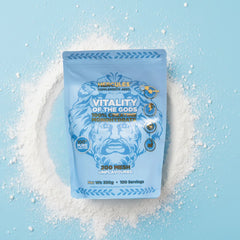
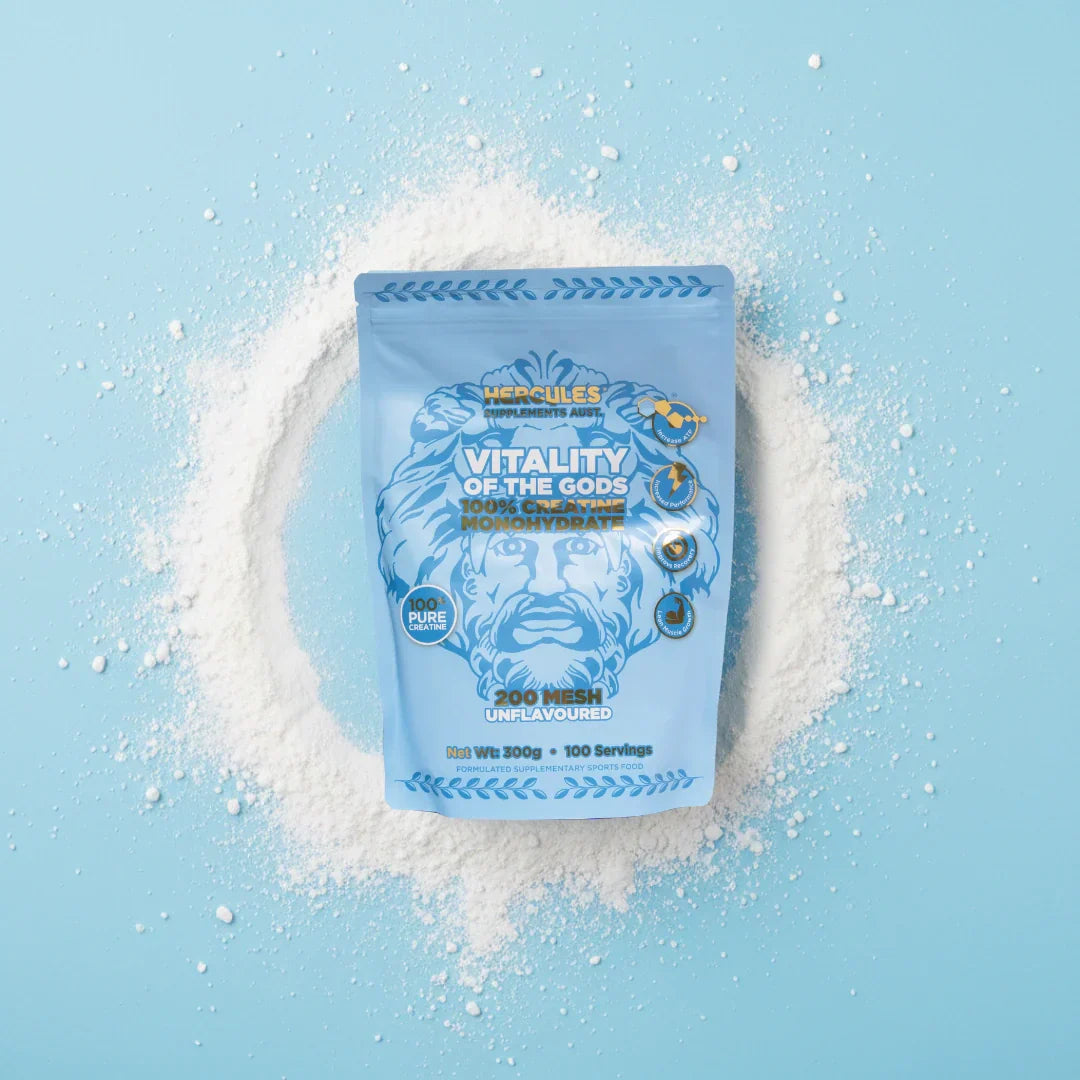
Not all creatine products feel the same in use, even when the label says creatine. Formula simplicity, serving clarity, sugar load, and mixability all shape whether the product becomes a daily habit or gets left in the cupboard. This belongs on the list because the best supplement on paper still fails if the routine around it is clumsy. Vitality of the Gods Creatine keeps this clean: single-ingredient creatine monohydrate, 3g serves, zero sugar, and no unnecessary extras. Rated 4.8 from 13 reviews — which supports the case for consistency and usability, not just theory.
Why it matters: Simple formulas are easier to repeat than noisy products full of extras
When should I take creatine?
Take it daily. Post-workout is fine, with a meal is fine, and rest days still count. The consistency of daily use matters more than chasing a perfect minute on the clock.
How much should I take?
Follow the product label. The Hercules creatine tub is built around a 3g serve, and daily use is the priority over loading protocols.
Can I stack it with pre-workout or protein?
Yes. Creatine stacks cleanly with protein, pre-workout, or a simple shake because it is a standalone performance support ingredient, not a stimulant.
Is creatine suitable for women?
Yes. The research base supports creatine for women's strength and exercise performance, and the same daily-consistency rule applies.
Does creatine cause bloating?
Some people notice early water-weight movement when they first start. That is not the same as body-fat gain, and it usually settles when dose, hydration, and routine are consistent.


